Wednesday, January 30, 2008

Healthy People, Healthy Profits, Healthy Planet


This is the title of our upcoming MELA (Midwest Ecological Landscaping Association) Conference at the Chicago Botanic Garden on February 28, 2008.

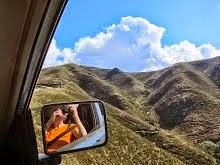
I know I should put in the sexy shot that grabs you all, but being contrary, I will instead post an image of what happens when we don't pursue these principles (deforestation in the Highlands of Guatemala).

But since I am an optimist, I have also included a picture of the ways we can help achieve better health through practicing "Triple Bottom Line," a commitment to sustainability in terms of people, our planet, and socially-responsible business practices. What you see here is a Guatemalan teenager I help support in terms of education through the organization Common Hope. Girls in Guatemala have an even harder time staying in school when the family can't make ends meet. And being a former teacher, of course I believe that education is one of the tickets to success. This is separate from the reforestation project I work on in Guatemala. Updated Earthways Annual Report will be on line soon!


Thursday, January 10, 2008

Anderson Japanese Gardens


I am long overdue on a promise to a few people to post some images of Anderson Gardens in Rockford, Illinois. One is a plant person and so he will be disappointed that I mostly photographed hardscape. It was an unseasonably warm October Day and so the plants had not yet changed into their dramatic finery. Plus, our timing had the sun high and bad for photographs. My friend, the sculptor, Joyce Blunk, will remember the textures of gravel, stone & bamboo fondly. More about her amazing art another day.

Monday, January 7, 2008

Unseasonal Weather


A week ago we had snow and below-freezing temps. Today's record high, broke the century-old record when we hit 60 degrees this afternoon. Not only is thunder rumbling, but a tornado watch is in effect. Meteorologists say a tornado has never been sighted near Chicago in January, but North near Rockford, we seem to have broken that record too.

Just way too funky for my taste, global warming or not. The poor plants are having to endure a roller coaster ride of freeze/thaw and possible eventual demise. Not to mention opportunistic diseases that creep in. Meantime, people (at least those quoted in the TRIB) seem to love it and are buying ice-cream. Well, this doesn't even subscribe to the Swedish dictum that you can eat ice-cream if the sun is shining...Bah humbug!

I looked through my photos to see what I was doing a year ago. At approximately this time in 2007, my mother and I were on an art vacation in NYC. The weather was also warm, in the 50s. From our B & B, I photographed the roof-top garden next door: you can see some conifers barely peeking over the edge.

Saturday, January 5, 2008

Earthways & MELA


(Image of
Achiote in medicinal garden in Casaca, Guatemala)

As I write project reports for Earthways regarding our support of the AFOPADI project in Guatemala, I am reviewing material on-line. Here is a resonating quote from the "Founder's Letter" by Andrew Beath at Earthways:

Economics can not come first. Economic decisions must be woven with ecological wisdom. To paraphrase Gary Snyder from his book, Earth House Hold, the word "ecology" means the planet as a "house and home" . This context should be the underlying essence of all economic decisions. We have polluted our home out of ignorance. Will we continue to spoil our nest? How will we be truly nurtured? The children of the planet are suffering.

I mention it because Andrew's words fit so well with our upcoming annual MELA Conference, "Healthy People, Healthy Profits, Healthy Planet."

Please join us!


Tuesday, January 1, 2008

Julbock and Bighorn Sheep


Lovely snow graced New Year's eve. We woke this morning to see the form of one of my favorite trees, Ostrya virginiana (American hophornbeam), etched in white. It is just beyond the snout of one of our several Julbocker or Swedish Yuletide goat. There are several interpretations as to the history and function of the goat in Swedish culture which you can find on the web.


The straw goat's horns remind me of the bighorn sheep featured in the current book I am reading. It is EATING STONE: Imagination and the Loss of the Wild by one of my favorite writers, Ellen Meloy (I rave about her book The Anthropology of Turquoise on my website homepage).

Thursday, December 20, 2007

More at Red Rock


What's unusual when we visit Red Rock Canyon is the time I actually have to look, listen and feel the wind. If you've read Tony Hillerman detective novels, you will be aware that the arroyos carve the space, give depth to the wide expanse beneath the hills. Water, either its lack or overwhelming torrents on the rare occasions of fast-rising storms, dictates the rocky canyons. Here in the Mojave desert, you can see the scrub that survives along the edge of the wash. Details of tiny survivor plants arrest.

Wednesday, December 19, 2007

Lyrical Landscape: Dr. Atomic


A few nights ago, I was lucky enough to stare intimately at the mountainous silhouette that was the Lyric opera's stage set for Dr. Atomic. Given my past life in the theater, I would be thrilled to attend anything done by the visionary librettist and stage director, Peter Sellars. And of course the composer, John Adams, is famed for his previous opera Nixon in China. Having missed that, I jumped at the chance to witness this production.
You are probably aware that the opera examines the actions and feelings of many of the principals involved in the Manhattan project. Set in Los Alamos, New Mexico in the summer of 1945, the opera focuses on J. Robert Oppenheimer. Sellars says that Dr. Atomic tries to put a human face on the human beings who created the atomic bomb. The opera was an amazing mix of trance-inducing, poetry-worshipping, heart-stopping and yes, lovely music, song, dance and art.
What does this have to do with landscape?
I quote Sellars: "The hope is that we make something that does have the feeling of what it's like to be alive right now -- with that intensity, with that sense that the stakes are that high -- global stakes. That what we do as Americans actually has incredible consequences -- genuinely high stakes for the future of the planet."
While we may not all be brilliant scientists poised to change the future on a scale this profound, we can all take responsibility for our earthly actions or lack thereof. The words still echo from one of my favorite poets, John Donne: "Batter my heart, three-person'd god. For you as yet but knock, breathe, shine, and seek to mend." Be there.

Since I don't have any images from New Mexico, above you can see Red Rock Canyon, Nevada. And if you wish to read an incredibly moving book about the effects of radiation fallout on humans and flooding on bird migration (among other things), read Terry Tempest Williams' book, Refuge: An Unnatural History of Family and Place.